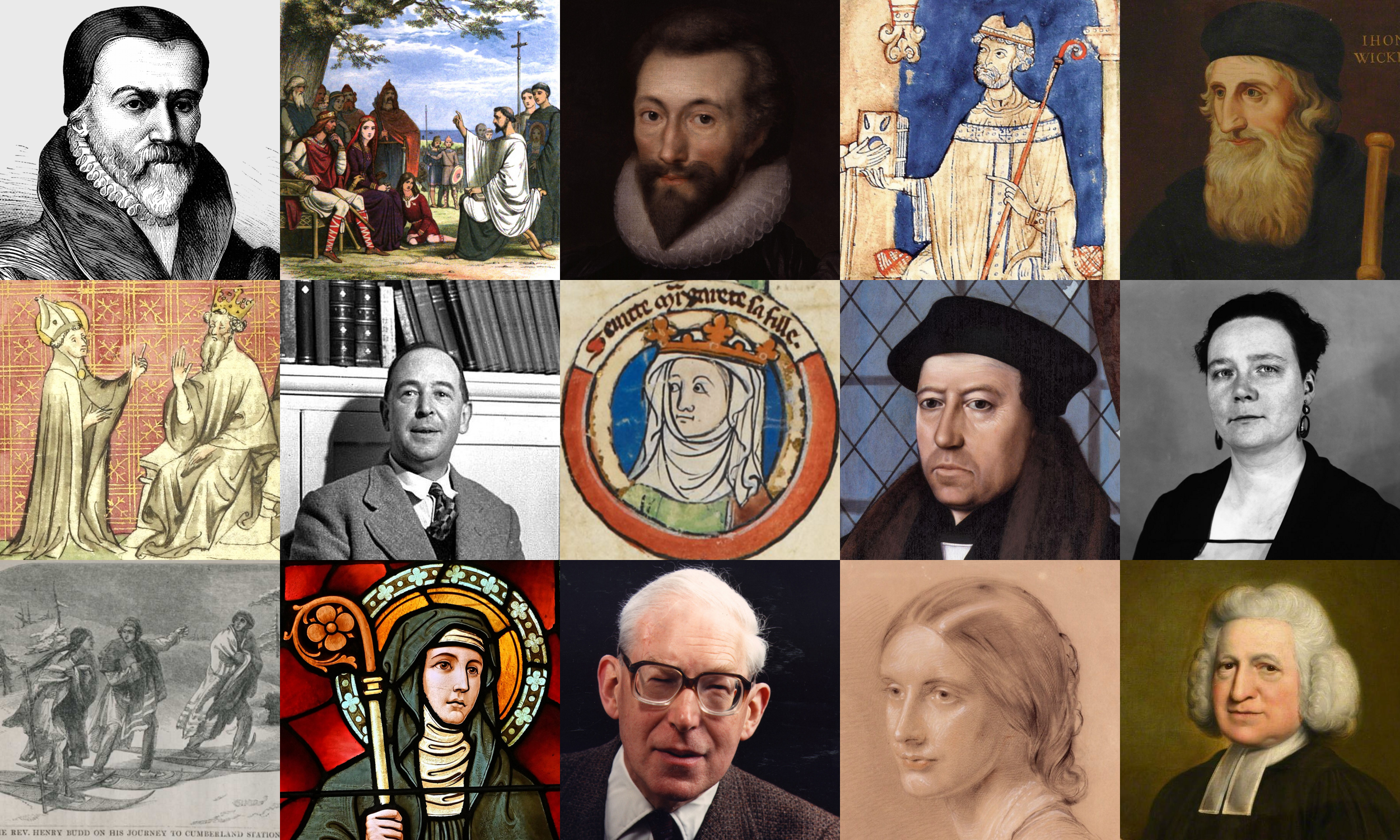
Anglicanism is a branch of the Christian Church that stretches back to the ancient Christianity of the British Isles, takes its classic shape in the English Reformation of the 16th century, and today comprises a family of churches all across the globe, with its “centre of gravity” no longer in England, but in the Global South. Depending how you count, Anglicans are probably the third-largest grouping of Christians in the world.
Both Catholic and Reformed
We often describe the Anglican tradition as “both catholic and reformed.”
The word “catholic” comes from the Greek words kata (according to) + holos (the whole). We Anglicans are catholic in the sense that we aim not to have any unique doctrines of our own, but to be “mere Christians,” teaching and believing what the whole of Christ’s Church has always taught and believed. This means holding on to all that God has revealed to us in his Word, the Bible; it also means leaving room for diversity of practice and opinion on matters where the Bible does not insist on any one way. Everything in Church history that is good and wholesome, consistent with the Word of God, we feel free to draw on as part of our own catholic heritage.
Anglicans are at the same time reformed, in the sense that we identify the Protestant Reformation as an especially vital part of that heritage. The Reformation (which began on the European Continent, but quickly spread to England) was a process of recovering elements of the catholic Christian faith that had fallen out of focus or been obscured in the medieval European Church—centrally, that we sinners are made right with God wholly by faith in Jesus, not by our own works. Justification by faith in Jesus is such good news, that Anglicans and other heirs of the Reformation are sometimes called evangelical, from the Greek words eu (good) + angelos (news).
As Anglicans, we know that, in every generation, the Church makes errors; but we rejoice that God is always using the Scriptures to correct those errors, and call his people to renewed faithfulness in teaching, worship, and manner of life. To be an Anglican then, or to be any other kind of catholic and reformed Christian, means to be a Biblical Christian, ever eager to hear from God in his Word.
Liturgical and Sacramental
Anglican worship is liturgical, meaning that our worship follows a set pattern. In our case, that pattern comes from the Book of Common Prayer (2019), which is itself based on the classic Book of Common Prayer (1662). The Book of Common Prayer has been described as “the Bible arranged for worship,” since so much of the language of its prayers is taken straight out of the Bible!
Anglican worship is also sacramental, and Holy Communion (also called the Lord’s Supper) is an especially important part of our Sunday worship. We believe that Jesus is spiritually present with us in this sacred meal.